Delivery model
Useful AI starts with a clear decision, not a generic model demo.
- 01
Choose the useful decision
Start with the workflow, person, or system decision that needs support. Not a model because it is trending.
- 02
Design the interface and tool boundaries
Define what the model may see, which tools it can use, how it returns work, and what remains human or rule-based.
- 03
Model a graph only when it earns its complexity
Use graph orchestration when the work actually needs stages, branches, specialisation, retries, or an explicit evaluation point.
- 04
Build the operational layer
Connect model providers, service APIs, guardrails, sandboxes, telemetry, and cost visibility to the product system.
- 05
Evaluate in real work
Test the capability against representative tasks, observe failure modes, and evolve the useful path before widening scope.
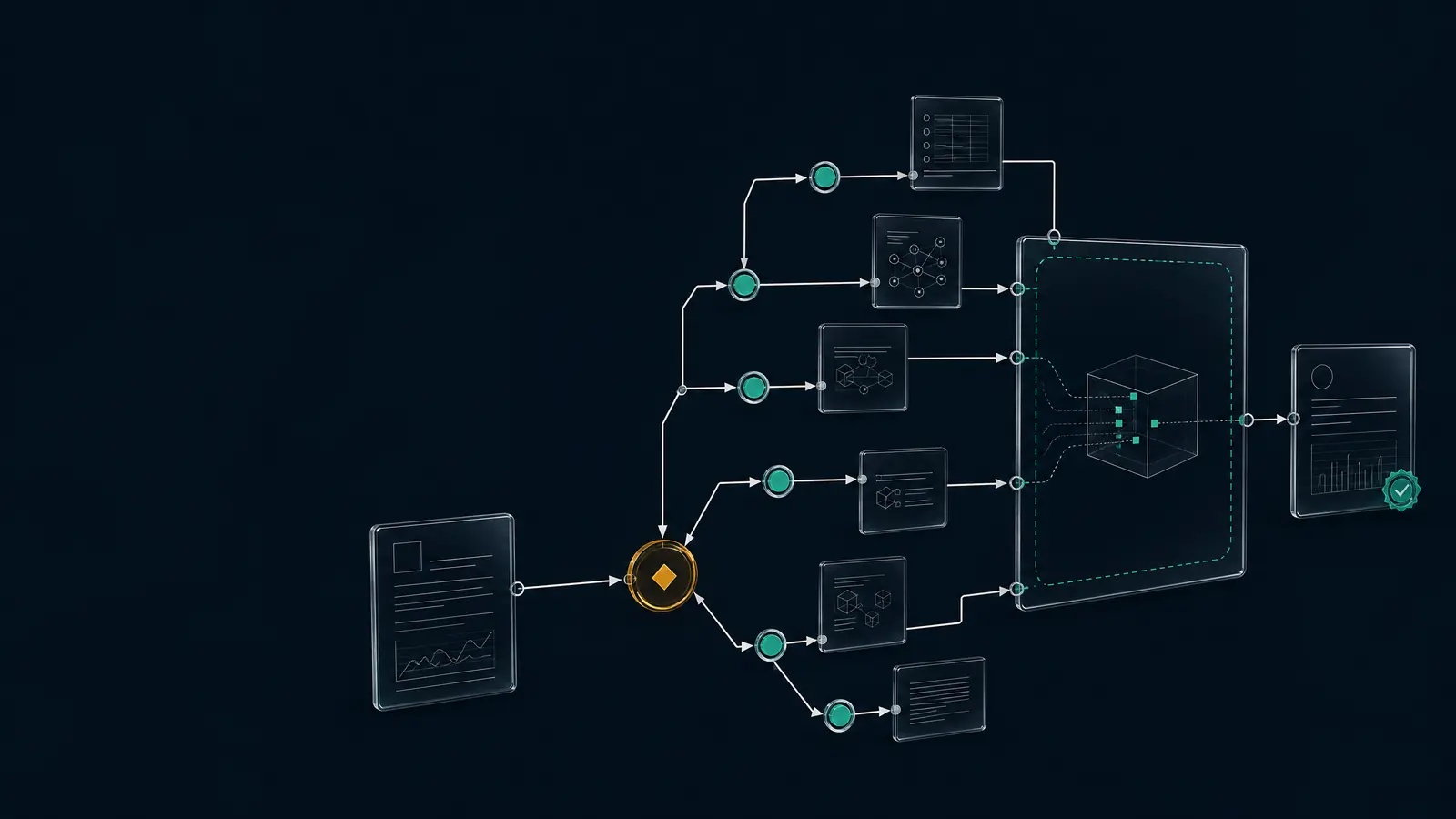
Graph engineering
Use a graph only when it justifies its complexity.
We use staged, branched, specialised, and tool-driven flows only when they make the product workflow more reliable, observable, or useful. If a simple service call is enough, it is the better choice.
WORKFLOW TRACE · REVIEW POINTTechnical evidence
Graph orchestration
The supplied Nexss sources include graph definitions, DAG compilation, specialist and agent patterns, and explicit graph execution interfaces.
LLM provider layer
The technical foundation includes provider adapters, streaming interfaces, local and hosted model paths, and configurable model selection.
Tools and sandboxes
The sources include tool registries, sandbox profiles, skill definitions, and bounded execution concepts for systems requiring controlled action.
Cost and telemetry
The sources include examples of LLM cost analytics and service telemetry. Cost and observability are treated as product requirements, not afterthoughts.
Next step
Bring the AI opportunity — and the constraint that makes it real.
We help decide whether an AI feature needs a simple prompt, a graph, a tool boundary, a service integration, or a smaller, more trustworthy solution.